
Table of Contents
Key Highlights
- India offers numerous regional biryani styles, answering the common question of how many types of biryani in India truly exist.
- From Hyderabadi and Awadhi biryani to Kolkata and Malabar versions, each reflects local ingredients and culinary traditions.
- Unique elements like raw marinated meat, dum cooking, coconut milk, jeera samba rice, and the addition of potatoes create distinct identities.
- There are also different types of chicken biryani, ranging from spicy Hyderabadi chicken dum biryani to milder Kolkata preparations.
- Mutton, goat meat, and vegetarian versions such as paneer and vegetable biryani expand the range of biryani varieties.
- Rice variety, spice mix, and cooking rice techniques directly influence aroma, texture, and flavour balance.
- Mild options like Awadhi and Kolkata biryani are ideal for those who prefer subtle flavours over intense heat.
- Vegetarian biryani is a layered rice dish in which a spiced masala of vegetables, paneer, or legumes and part-cooked basmati finish together under a sealed lid, and pulao cooks the rice and vegetables together in one pot.
- Pew Research Center found in 2021 that 39% of Indian adults describe themselves as vegetarian, which is why meatless rice dishes are everyday cooking.
- The ICMR-NIN Dietary Guidelines for Indians 2024 list vegetable biryani at a glycemic index of 74.53 and plain rice at 78.23, so neither dish counts as a low-glycemic food.
With so many regional favourites available, many food lovers often wonder how many types of biryani in India actually exist and which one suits their taste best. The variety can make choosing the right style confusing.
Each region has developed its own approach using local rice, distinct spice combinations, and unique cooking methods. From bold mutton preparations to different types of chicken biryani, the flavours and textures vary widely.
This blog explores the main regional variations, essential ingredients, and flavour profiles of popular biryani styles, helping you understand what sets each version apart and how to select the one that matches your preference.
What Are the Most Popular Types of Biryani in India?
Biryani is not a single recipe but a celebration of regional identity, cooking techniques, and local ingredients. From the bold dum style of Hyderabad to the subtle Nawabi flavours of Lucknow and the coastal influences of Kerala and Karnataka, each variation tells a unique culinary story.
Below are some of the most loved and widely recognised types of biryani across India, showcasing the incredible diversity of this iconic rice dish:
1) Hyderabadi Mutton Biryani
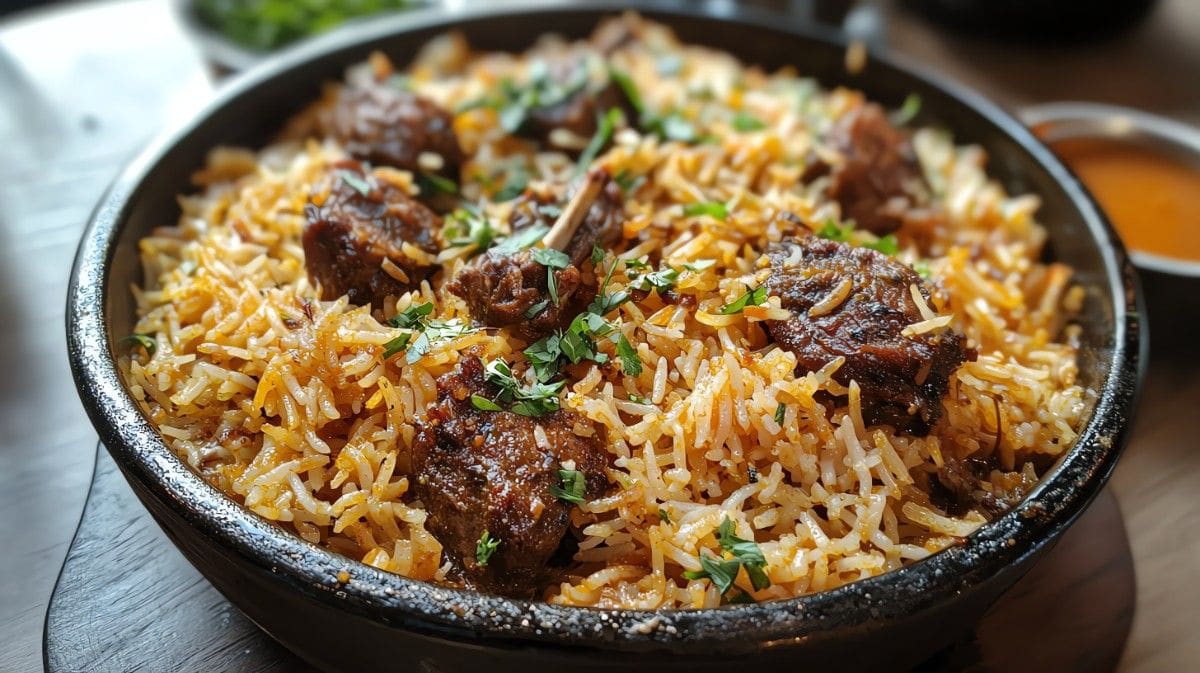
Hyderabadi Mutton Biryani is a royal rice delicacy made with fragrant basmati rice, tender mutton, and aromatic spices layered using the traditional dum method. Originating from Hyderabad, it blends Mughlai richness with regional flavours. Prepared in kachchi and pakki styles, slow steam cooking locks in saffron, mint, and spice-infused aroma into every grain.
Ingredients
- 2 cups basmati rice
- 500 grams of mutton
- 1 cup thick curd
- 2 large onions, thinly sliced
- 1 tablespoon ginger garlic paste
- 2 green chillies, slit
- 1 teaspoon red chilli powder
- ½ teaspoon turmeric powder
- 1 teaspoon garam masala
- Whole spices such as bay leaf, cloves, cardamom, and cinnamon
- Fresh mint leaves
- Fresh coriander leaves
- A few strands of saffron soaked in warm milk
- 3 tablespoons oil or ghee
- Salt to taste
Recipe
- Wash and soak the basmati rice for 30 minutes, then parboil it with whole spices until it is about 70 percent cooked before draining completely.
- Marinate the mutton with curd, ginger, garlic paste, chilli powder, turmeric, salt, mint, and coriander for at least one to two hours for deep flavour and tenderness.
- Heat oil or ghee in a heavy-bottom vessel and fry sliced onions until golden brown and crisp, keeping some aside for layering.
- Spread the marinated mutton evenly at the base, layer the partially cooked rice over it, and drizzle saffron milk along with fried onions.
- Cover with a tight lid and cook on a very low flame for 35 to 40 minutes so the steam gently cooks the mutton and blends the flavours thoroughly.
- Allow it to rest for 10 minutes before gently fluffing and serving hot with raita or mirchi ka salan.
Hyderabadi Mutton Biryani is more than just a rice dish. It represents tradition, celebration, and slow-cooked perfection. With its layered spices, tender mutton, and fragrant basmati rice, this classic recipe brings rich, authentic flavours to your dining table. Serve it hot with raita and salan for a wholesome and satisfying Indian meal.
2) Awadhi Dum Biryani
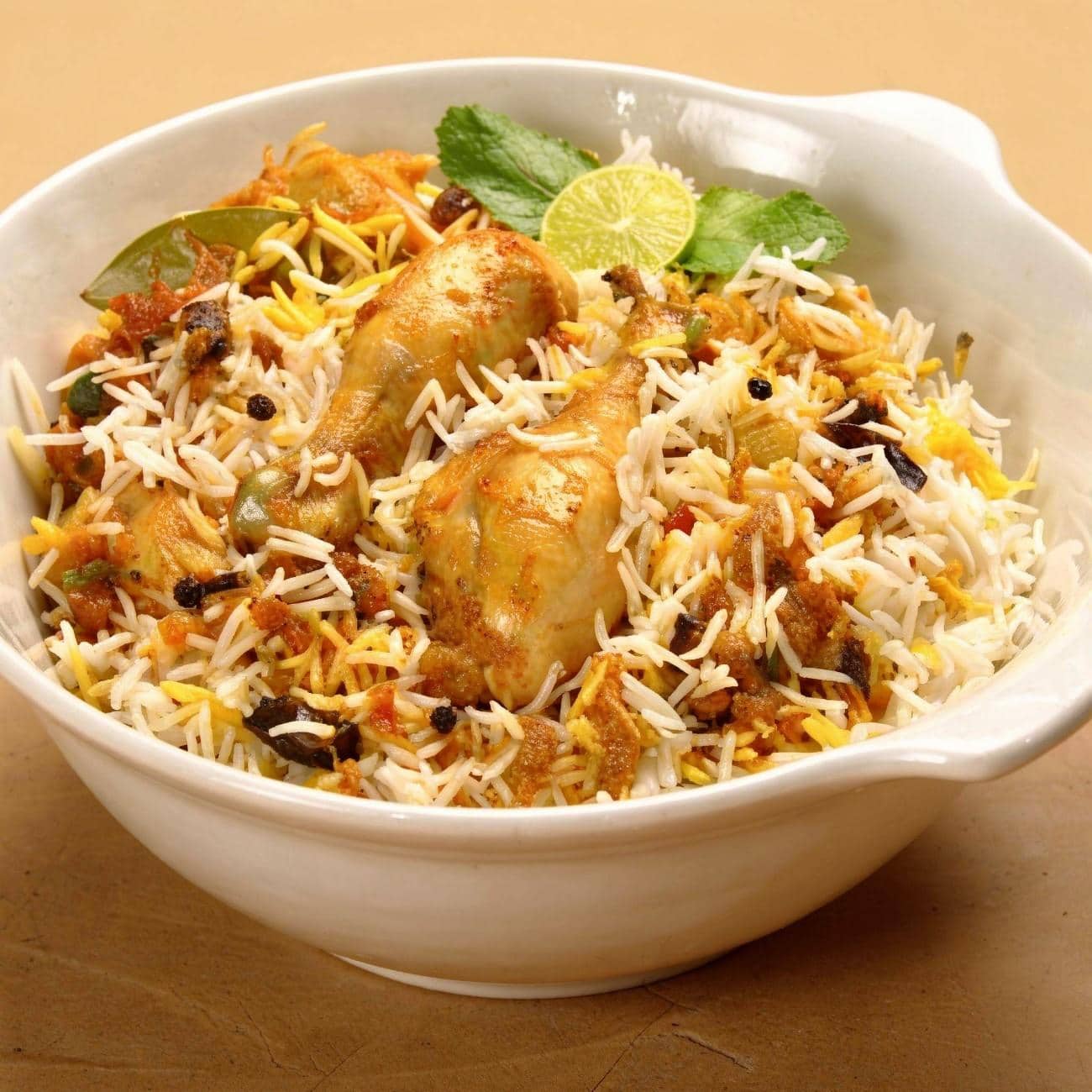
Awadhi Dum Biryani is a fragrant rice dish from Lucknow, known for its subtle spices, tender meat, and refined cooking technique. Unlike spicier regional versions, it focuses on delicate flavours and aromatic layering. Slow-cooked using the dum method, this biryani reflects royal Nawabi heritage and offers a rich yet balanced taste experience.
Ingredients
- 2 cups basmati rice
- 500 grams of mutton or chicken
- 1 cup thick curd
- 2 large onions, thinly sliced
- 1 tablespoon ginger garlic paste
- 1 teaspoon red chilli powder
- ½ teaspoon turmeric powder
- 1 teaspoon garam masala
- Whole spices such as bay leaf, cloves, green cardamom, black cardamom, and cinnamon
- Fresh coriander leaves
- Fresh mint leaves
- A few strands of saffron soaked in warm milk
- 3 tablespoons ghee
- ½ cup milk
- Salt to taste
Recipe
- Wash and soak the basmati rice for 30 minutes, then cook it with whole spices until it is about 70 percent done before draining.
- Marinate the meat with curd, ginger, garlic paste, chilli powder, turmeric, garam masala, and salt for at least one hour for enhanced flavour.
- Heat ghee in a heavy-bottom pot and sauté sliced onions until light golden, reserving some for layering.
- Cook the marinated meat gently until it is partially tender and coated in rich masala.
- Layer the meat at the bottom, spread the partially cooked rice over it, sprinkle mint, coriander, fried onions, saffron milk, and a little warm milk evenly.
- Seal the pot tightly and cook on a low flame for 25 to 30 minutes so the steam finishes cooking and blends the flavours delicately.
- Rest for 10 minutes before gently mixing and serving hot.
Awadhi Dum Biryani stands out for its elegance and subtlety. With its aromatic rice, tender meat, and gentle spice profile, it delivers a royal dining experience. Serve it with raita or a light gravy for a complete and satisfying traditional Indian meal.
3) Kalyani Biryani
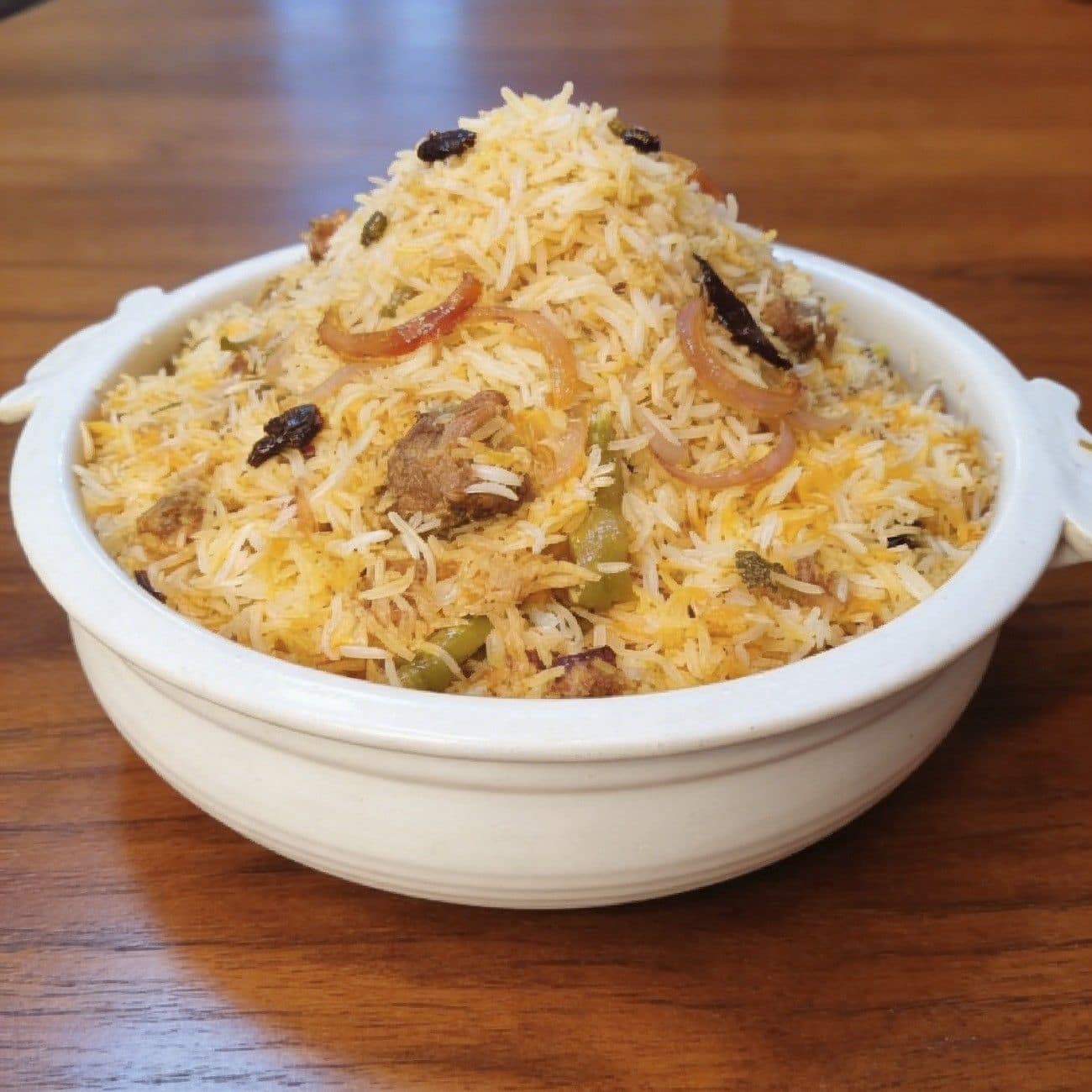
Kalyani Biryani is a popular Hyderabadi-style biryani known for its bold flavours and affordable origins. Traditionally made with buffalo meat, this biryani became famous in local eateries around Hyderabad. It features fragrant rice, spicy masala, and a slightly tangy taste, offering a robust and satisfying meal loved by biryani enthusiasts.
Ingredients
- 2 cups basmati rice
- 500 grams buffalo meat or mutton
- 1 cup curd
- 2 large onions, sliced
- 1 tablespoon ginger garlic paste
- 2 green chillies, slit
- 1 teaspoon red chilli powder
- ½ teaspoon turmeric powder
- 1 teaspoon garam masala
- Whole spices such as bay leaf, cloves, cardamom, and cinnamon
- Fresh mint leaves
- Fresh coriander leaves
- Juice of half a lemon
- 3 tablespoons oil
- Salt to taste
Recipe
- Wash and soak the basmati rice for 30 minutes, then parboil it with whole spices until it is about 70 percent cooked before draining.
- Marinate the meat with curd, ginger-garlic paste, chilli powder, turmeric, garam masala, lemon juice, salt, mint, and coriander for at least one hour.
- Heat oil in a heavy-bottom vessel and fry sliced onions until golden brown and aromatic.
- Add the marinated meat and cook until it becomes tender and the masala thickens well.
- Layer the partially cooked rice over the meat evenly, sprinkle fried onions and a few mint leaves on top.
- Cover tightly and cook on a low flame for 20 to 25 minutes so the flavours blend thoroughly.
- Rest for 10 minutes before gently mixing and serving hot.
Kalyani Biryani is known for its strong spice profile and rich taste. Simple yet flavourful, it delivers authentic Hyderabadi street style charm. Serve it with raita or salan for a hearty and satisfying Indian meal.
4) Kolkata Biryani
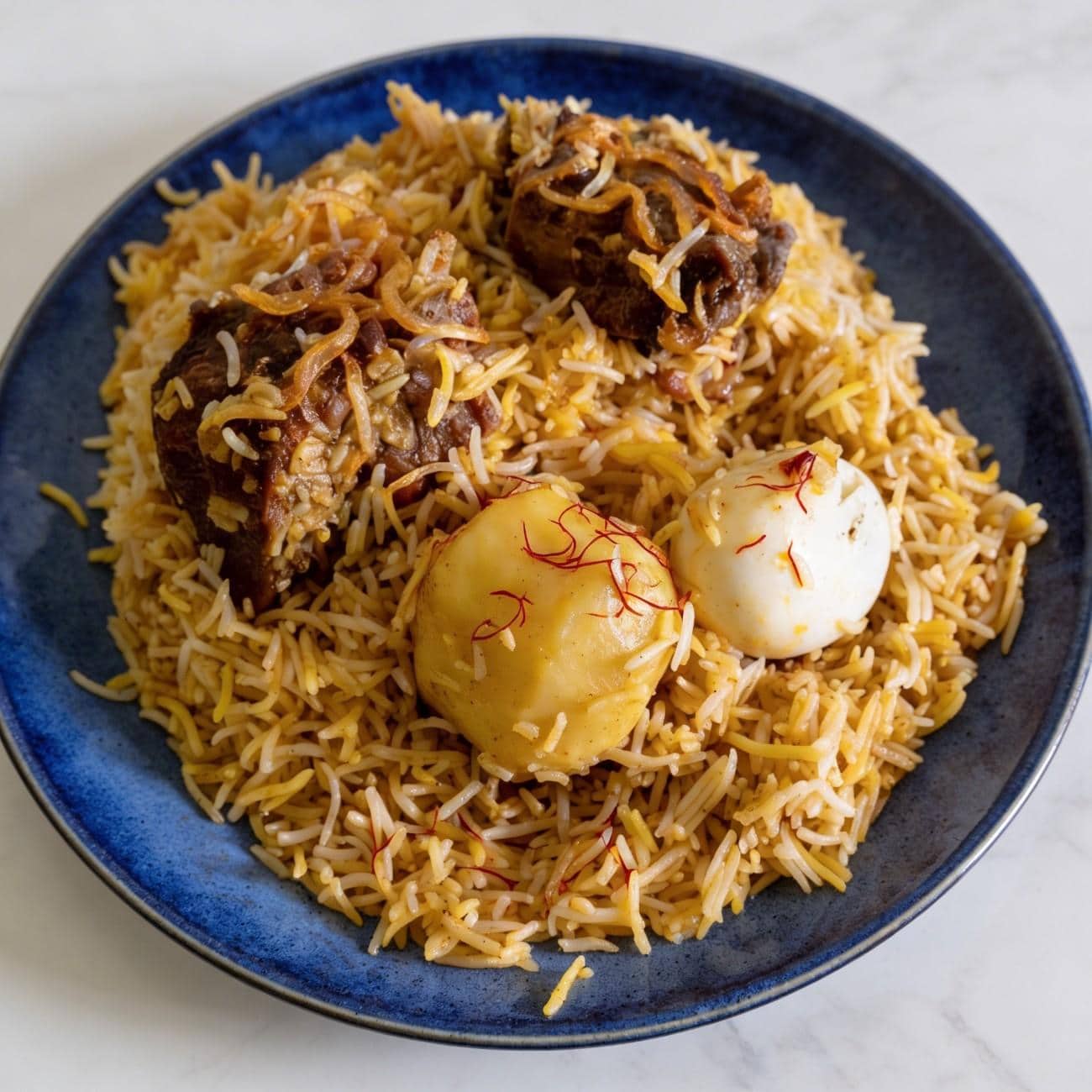
Kolkata Biryani is a fragrant and mildly spiced rice dish known for its unique addition of boiled potatoes and subtle sweetness. Introduced by Nawab Wajid Ali Shah in Kolkata, this biryani reflects Awadhi influence with a lighter spice profile. It focuses on aroma, tender meat, and delicate flavours rather than intense heat.
Ingredients
- 2 cups basmati rice
- 500 grams of mutton or chicken
- 2 large potatoes, halved and boiled
- 1 cup curd
- 2 large onions, thinly sliced
- 1 tablespoon ginger garlic paste
- 1 teaspoon red chilli powder
- ½ teaspoon turmeric powder
- 1 teaspoon biryani masala
- Whole spices such as bay leaf, cloves, green cardamom, and cinnamon
- A few drops of kewra water or rose water
- Fresh mint leaves
- 3 tablespoons ghee or oil
- A few strands of saffron soaked in warm milk
- Salt to taste
Recipe
- Wash and soak the basmati rice for 30 minutes, then cook with whole spices until about 70 percent done before draining fully.
- Marinate the meat with curd, ginger, garlic paste, chilli powder, turmeric, salt, and biryani masala for at least one hour.
- Heat ghee in a heavy-bottomed vessel and fry sliced onions until golden brown and aromatic.
- Cook the marinated meat gently until tender and coated in rich masala.
- Lightly fry the boiled potatoes in ghee until slightly golden.
- Layer the cooked meat at the base, arrange potatoes over it, and spread partially cooked rice evenly on top.
- Sprinkle saffron milk, kewra water, fried onions, and mint leaves, then seal and cook on a low flame for 20 to 25 minutes.
- Rest before gently fluffing and serving hot.
Kolkata Biryani stands out for its elegance and balanced flavours. With aromatic rice, tender meat, and signature potatoes, it offers a refined yet comforting experience. Serve it with a light raita or salad for a complete and satisfying Indian meal.
5) Bombay Biryani
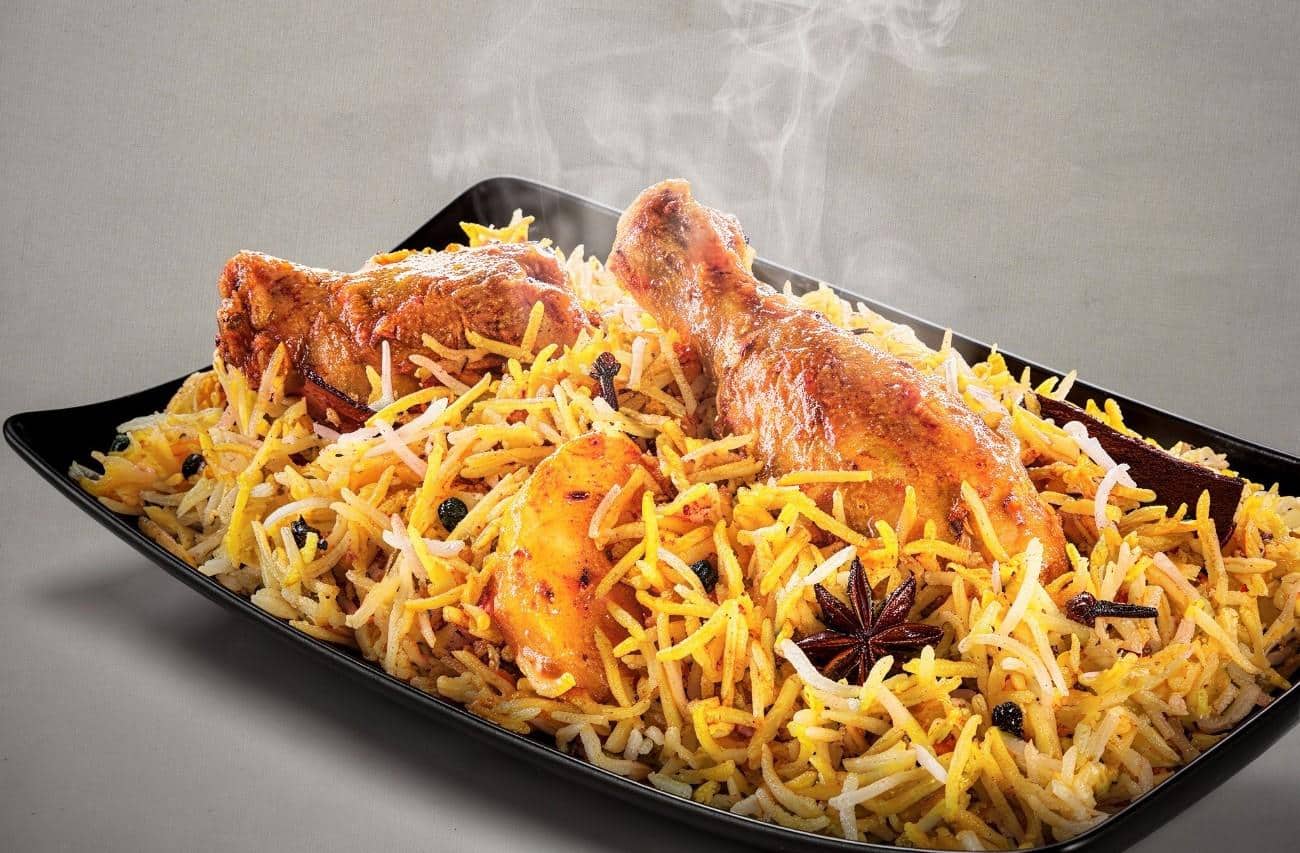
Bombay Biryani is a vibrant and flavour-packed rice dish popular in Mumbai. Known for its spicy masala, fried potatoes, and a hint of sweetness from dried plums, it offers a bold contrast of flavours. This biryani combines aromatic basmati rice with tender meat and tangy notes, creating a rich and satisfying meal.
Ingredients
- 2 cups basmati rice
- 500 grams of mutton or chicken
- 2 medium potatoes, sliced and fried
- 1 cup curd
- 2 large onions, thinly sliced
- 1 tablespoon ginger garlic paste
- 2 green chillies, slit
- 1 teaspoon red chilli powder
- ½ teaspoon turmeric powder
- 1 teaspoon biryani masala
- Whole spices such as bay leaf, cloves, cardamom, and cinnamon
- 3 to 4 dried plums or aloo bukhara
- Fresh mint leaves
- Fresh coriander leaves
- A few strands of saffron soaked in warm milk
- 3 tablespoons oil or ghee
- Salt to taste
Recipe
- Wash and soak the basmati rice for 30 minutes, then cook with whole spices until about 70 percent done before draining completely.
- Marinate the meat with curd, ginger, garlic paste, chilli powder, turmeric, biryani masala, salt, mint, and coriander for at least one hour.
- Heat oil in a heavy-bottom vessel and fry sliced onions until golden brown and aromatic.
- Cook the marinated meat until tender and coated in thick masala.
- Lightly fry the potato slices until crisp and golden.
- Layer the cooked meat at the base, arrange fried potatoes and dried plums over it, and spread partially cooked rice evenly on top.
- Sprinkle saffron milk and fried onions, then cover tightly and cook on a low flame for 20 to 25 minutes.
- Rest for 10 minutes before gently fluffing and serving hot.
Bombay Biryani is loved for its bold spices and tangy sweetness. With aromatic rice, tender meat, and flavourful potatoes, it delivers a hearty and memorable dining experience. Serve it hot with raita or salad for a complete and satisfying Indian meal.
6) Malabar (Thalassery) Biryani
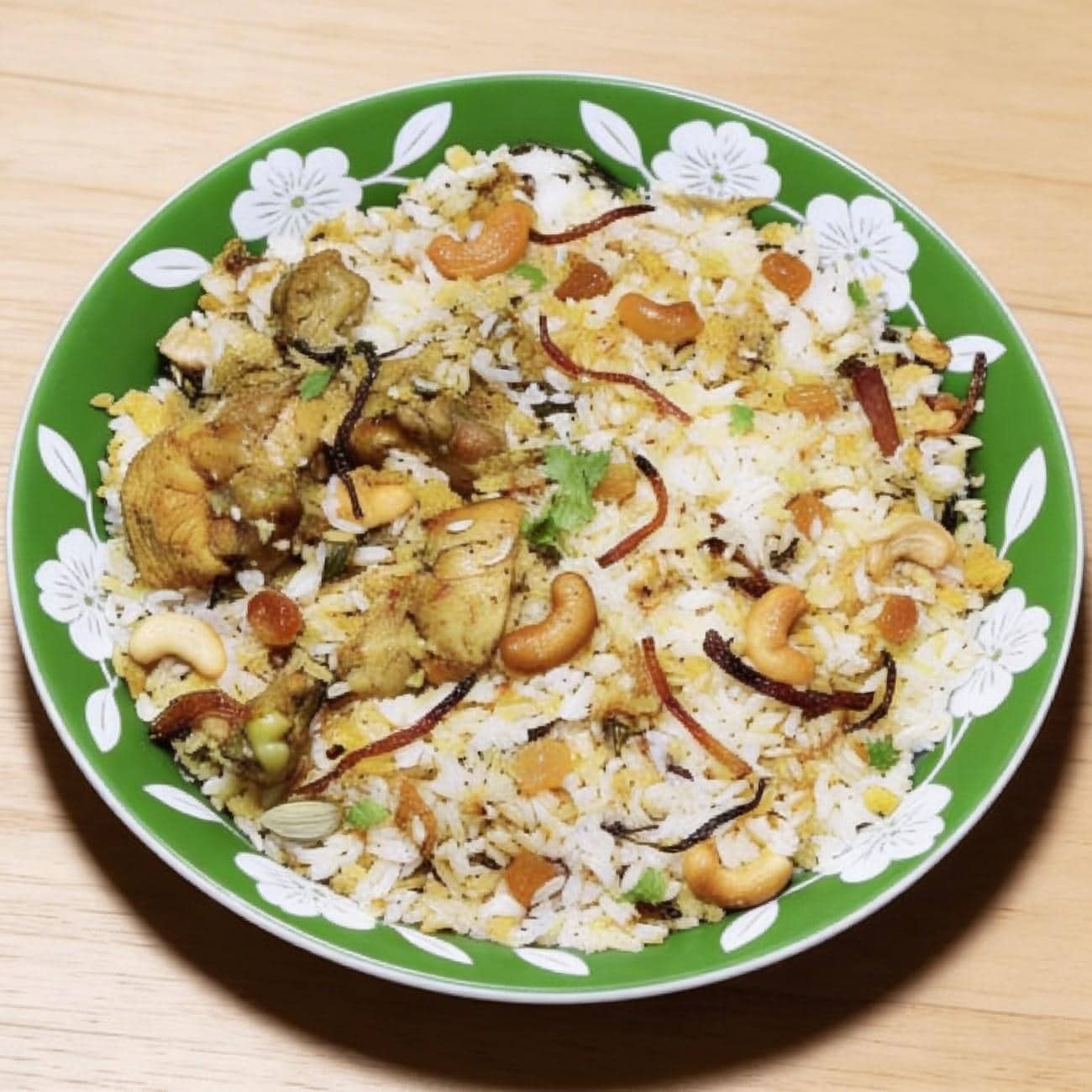
Malabar Biryani, also known as Thalassery Biryani, is a fragrant Kerala-style rice dish made with short-grain kaima rice instead of basmati. It features mild spices, caramelised onions, and a subtle sweetness from raisins and cashews. This biryani reflects Arab and Malabar influences, offering a rich yet balanced coastal flavour profile.
Ingredients
- 2 cups kaima or jeerakasala rice
- 500 grams of chicken or mutton
- 1 cup curd
- 2 large onions, thinly sliced
- 1 tablespoon ginger garlic paste
- 2 green chillies, slit
- ½ teaspoon turmeric powder
- 1 teaspoon garam masala
- Whole spices such as bay leaf, cloves, cardamom, and cinnamon
- Fresh mint leaves
- Fresh coriander leaves
- 2 tablespoons raisins
- 2 tablespoons cashew nuts
- 3 tablespoons ghee
- Juice of half a lemon
- Salt to taste
Recipe
- Wash and soak the kaima rice for 20 minutes, then cook separately with whole spices until just done and fluffy before draining excess water.
- Marinate the chicken or mutton with curd, ginger, garlic paste, turmeric, salt, mint, and coriander for at least one hour.
- Heat ghee in a heavy-bottom vessel and fry sliced onions until golden brown, then remove some for garnishing.
- In the same vessel, cook the marinated meat gently until tender and coated in rich masala.
- Lightly fry cashews and raisins in ghee until golden and aromatic.
- Layer the cooked rice over the meat masala, sprinkle fried onions, cashews, raisins, lemon juice, and a pinch of garam masala.
- Cover tightly and cook on a low flame for 15 to 20 minutes so the flavours blend well.
- Rest briefly before gently mixing and serving hot.
Malabar Biryani stands out for its delicate spices and unique rice variety. With tender meat, aromatic kaima rice, and sweet, nutty garnish, it delivers a comforting coastal experience. Serve it with raita or pickle for a wholesome and satisfying Kerala-style meal.
7) Ambur Biryani
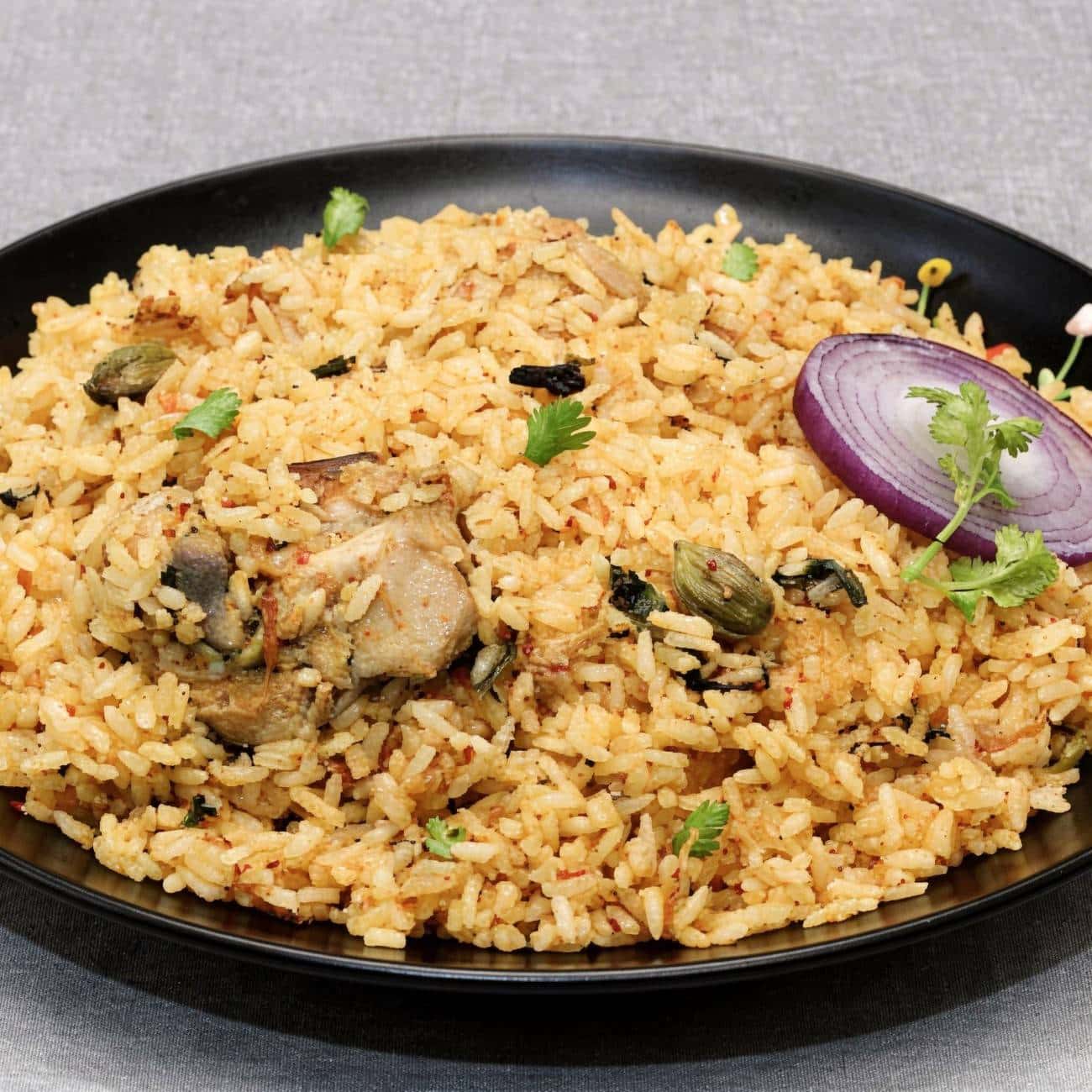
Ambur Biryani is a traditional Tamil Nadu-style biryani known for its simple spices and distinct flavour. Originating from the town of Ambur, this biryani uses short-grain seeraga samba rice and a chilli-based masala rather than heavy garam masala. It offers a mildly spicy, aromatic, and well-balanced taste.
Ingredients
- 2 cups seeraga samba rice
- 500 grams of mutton or chicken
- 1 cup curd
- 2 large onions, thinly sliced
- 1 tablespoon ginger garlic paste
- 2 tablespoons red chilli paste
- ½ teaspoon turmeric powder
- Whole spices such as bay leaf, cloves, and cinnamon
- Fresh mint leaves
- Fresh coriander leaves
- 3 tablespoons oil
- Juice of half a lemon
- Salt to taste
Recipe
- Wash and soak the seeraga samba rice for 20 minutes, then keep it aside while preparing the masala.
- Marinate the meat with curd, ginger, garlic paste, chilli paste, turmeric, salt, mint, and coriander for at least one hour.
- Heat oil in a heavy-bottom vessel and sauté sliced onions until soft and lightly golden.
- Add whole spices and the marinated meat, cooking until the meat turns tender and the masala thickens well.
- Add measured water and bring it to a boil, then add the soaked rice directly into the same vessel.
- Cook on medium flame until the rice absorbs most of the liquid, then cover and cook on low flame until fully done.
- Drizzle lemon juice, rest briefly, and gently fluff before serving hot.
Ambur Biryani is celebrated for its straightforward preparation and bold chilli flavour. With aromatic seeraga samba rice and tender meat, it delivers authentic Tamil Nadu taste in every bite. Serve it with brinjal curry or raita for a complete and satisfying meal.
8) Dindigul Biryani
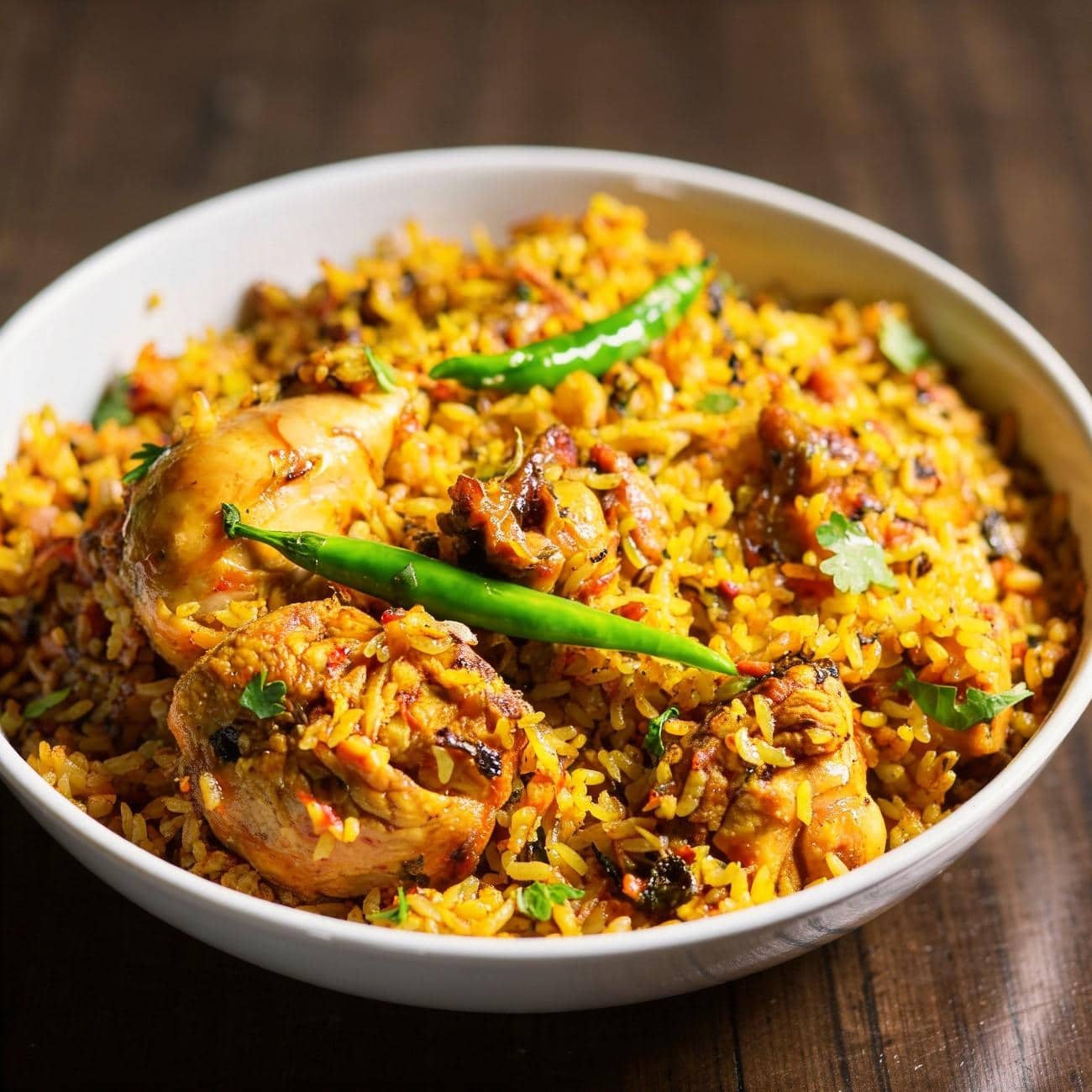
Dindigul Biryani is a popular Tamil Nadu-style biryani known for its tangy flavour and distinct aroma. Made with short-grain seeraga samba rice, it features a balanced blend of spices and a noticeable hint of lemon. This biryani is lighter in texture yet rich in taste, offering a satisfying and authentic South Indian experience.
Ingredients
- 2 cups seeraga samba rice
- 500 grams of mutton or chicken
- 1 cup thick curd
- 2 large onions, finely sliced
- 1 tablespoon ginger garlic paste
- 2 green chillies, slit
- 1 teaspoon red chilli powder
- ½ teaspoon turmeric powder
- Whole spices such as bay leaf, cloves, cinnamon, and cardamom
- Fresh mint leaves
- Fresh coriander leaves
- Juice of one lemon
- 3 tablespoons oil
- Salt to taste
Recipe
- Wash and soak the seeraga samba rice for 20 minutes, then drain and keep aside.
- Marinate the meat with curd, ginger, garlic paste, chilli powder, turmeric, salt, mint, and coriander for at least one hour.
- Heat oil in a heavy-bottom vessel and sauté sliced onions until soft and lightly golden.
- Add whole spices and the marinated meat, cooking until the meat becomes tender and the masala thickens.
- Pour in measured water, bring it to a boil, then add the soaked rice directly into the same vessel.
- Cook on medium flame until most of the liquid is absorbed, then cover and cook on low flame until the rice is fully done.
- Drizzle lemon juice, allow it to rest briefly, and gently fluff before serving hot.
Dindigul Biryani is loved for its tangy twist and aromatic seeraga samba rice. With tender meat and well-balanced spices, it delivers comforting South Indian flavours. Serve it with onion raita or brinjal curry for a wholesome and satisfying meal.
9) Bhatkali Biryani
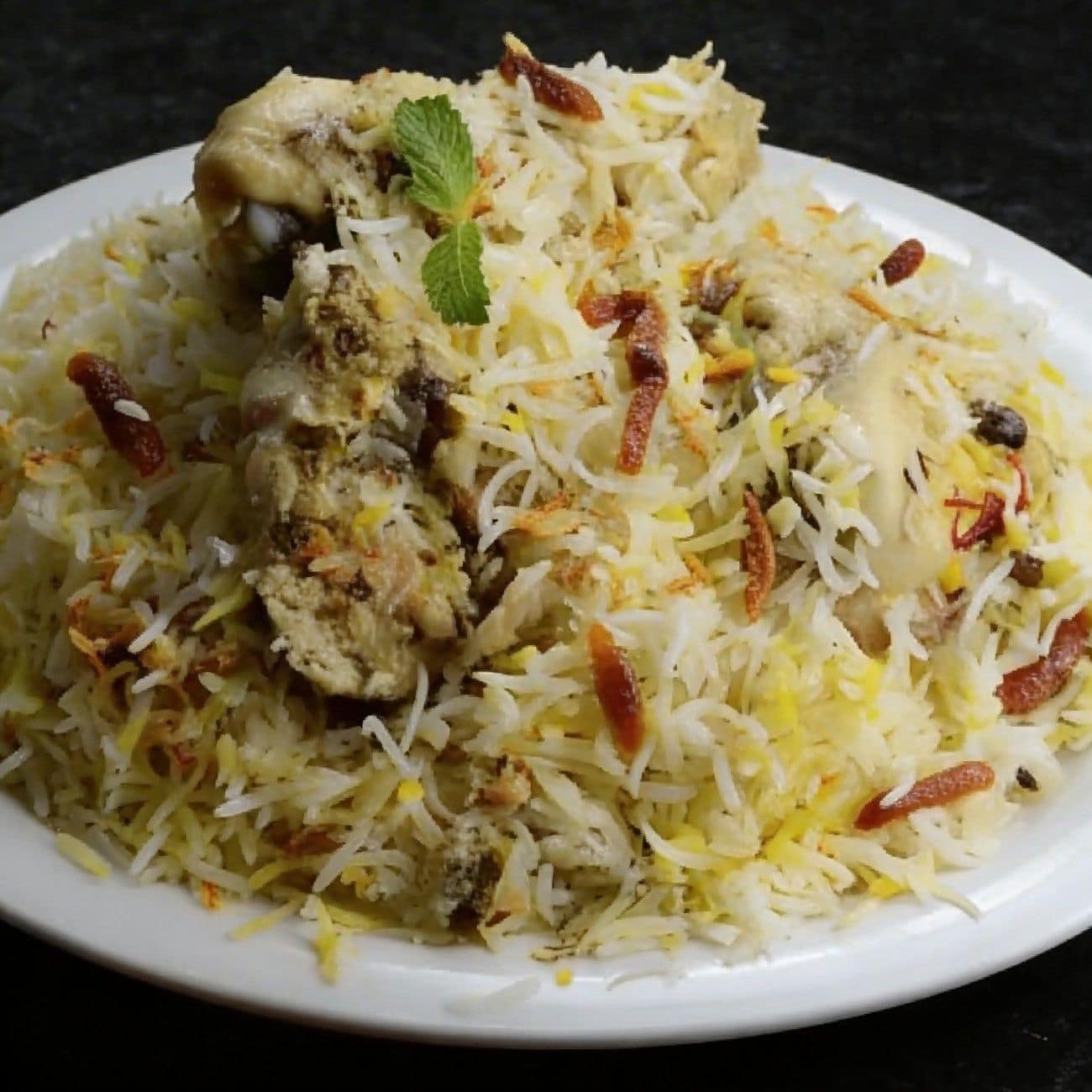
Bhatkali Biryani is a unique coastal Karnataka-style biryani known for its deep brown masala and bold, spicy flavour. Influenced by Arab traders, it combines fragrant rice with richly cooked meat and caramelised onions. Unlike layered biryanis, the masala and rice are often cooked together, creating a robust and intensely aromatic dish.
Ingredients
- 2 cups basmati rice
- 500 grams of mutton or chicken
- 2 large onions, thinly sliced
- 1 tablespoon ginger garlic paste
- 2 teaspoons red chilli powder
- ½ teaspoon turmeric powder
- 1 teaspoon coriander powder
- ½ teaspoon garam masala
- Whole spices such as bay leaf, cloves, cardamom, and cinnamon
- 1 cup thick curd
- Fresh mint leaves
- Fresh coriander leaves
- Juice of half a lemon
- 3 tablespoons oil
- Salt to taste
Recipe
- Wash and soak the basmati rice for 30 minutes, then cook it until about 70% done and drain completely.
- Marinate the meat with curd, ginger, garlic paste, chilli powder, turmeric, coriander powder, garam masala, salt, mint, and coriander for at least one hour.
- Heat oil in a heavy-bottom vessel and fry sliced onions until deeply browned to create the signature dark masala base.
- Add the marinated meat and cook thoroughly until tender and coated in thick, rich gravy.
- Layer the partially cooked rice over the masala, drizzle lemon juice, and sprinkle extra fried onions if desired.
- Cover tightly and cook on a low flame for 20 to 25 minutes so the flavours blend evenly.
- Rest briefly before gently fluffing and serving hot.
Bhatkali Biryani stands out for its intense spice blend and rich caramelised onion flavour. With aromatic rice and tender meat, it delivers a hearty coastal taste. Serve it with raita or a simple salad for a satisfying and flavourful Indian meal.
10) Memoni Biryani
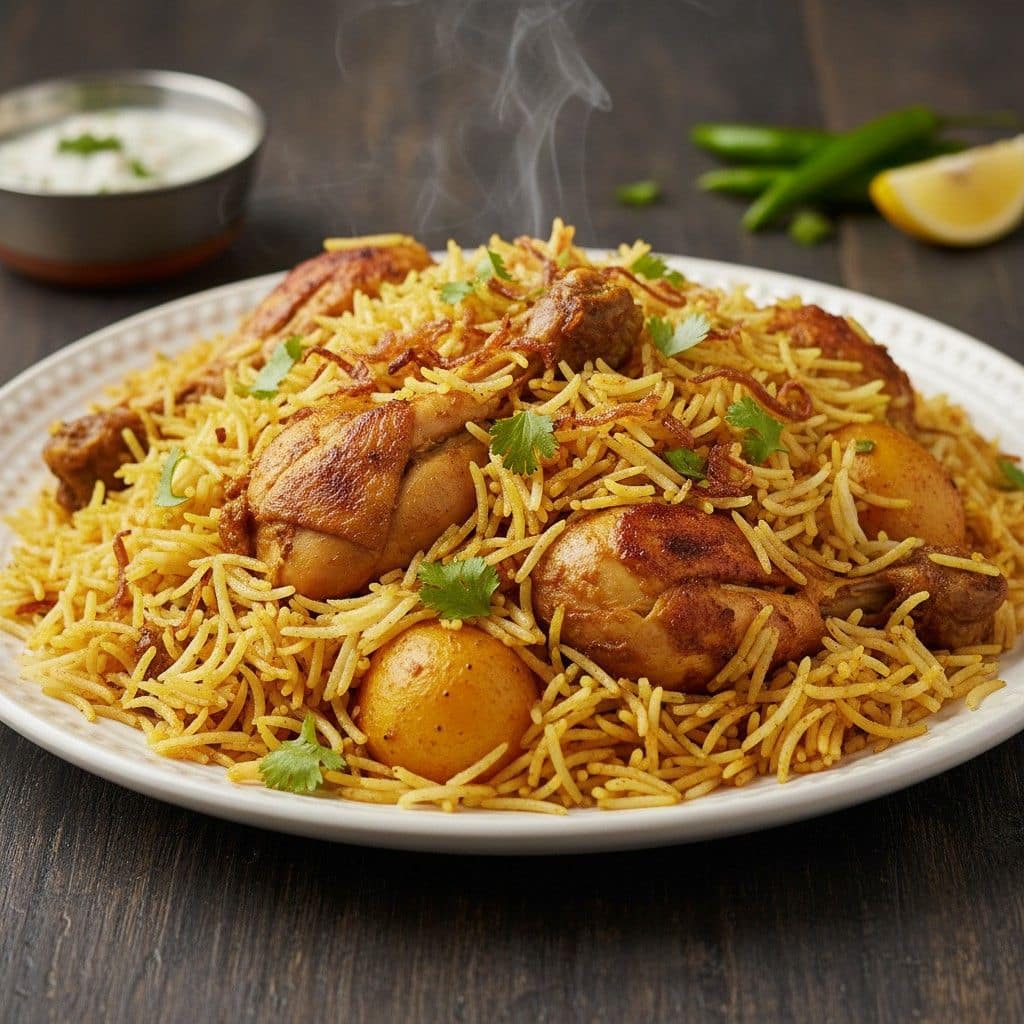
Memoni Biryani is a spicy and aromatic rice dish prepared by the Memon community, popular in Gujarat and parts of Maharashtra. Known for its bold heat and minimal use of heavy garam masala, it focuses on fresh green chillies, yoghurt, and whole spices. This biryani delivers a fiery, flavourful experience with tender meat and fragrant rice.
Ingredients
- 2 cups basmati rice
- 500 grams of mutton or chicken
- 1 cup thick curd
- 2 large onions, thinly sliced
- 1 tablespoon ginger garlic paste
- 3 to 4 green chillies, crushed
- 1 teaspoon red chilli powder
- ½ teaspoon turmeric powder
- Whole spices such as bay leaf, cloves, cardamom, and cinnamon
- Fresh mint leaves
- Fresh coriander leaves
- 2 medium tomatoes, chopped
- 3 tablespoons oil
- Salt to taste
Recipe
- Wash and soak the basmati rice for 30 minutes, then parboil it until about 70 percent cooked and drain completely.
- Marinate the meat with curd, ginger, garlic paste, green chillies, chilli powder, turmeric, salt, mint, and coriander for at least one hour.
- Heat oil in a heavy-bottom vessel and sauté sliced onions until lightly golden and aromatic.
- Add chopped tomatoes and cook until soft, then add the marinated meat and cook until tender and well-coated in masala.
- Layer the partially cooked rice over the meat mixture evenly.
- Cover tightly and cook on a low flame for 20 to 25 minutes so the flavours blend thoroughly.
- Rest for 10 minutes before gently fluffing and serving hot.
Memoni Biryani is celebrated for its spicy kick and simple yet bold seasoning. With aromatic rice and juicy meat, it offers a vibrant and satisfying taste. Serve it with cooling raita to balance the heat and enjoy a complete, flavour-packed Indian meal.
11) Beary Biryani
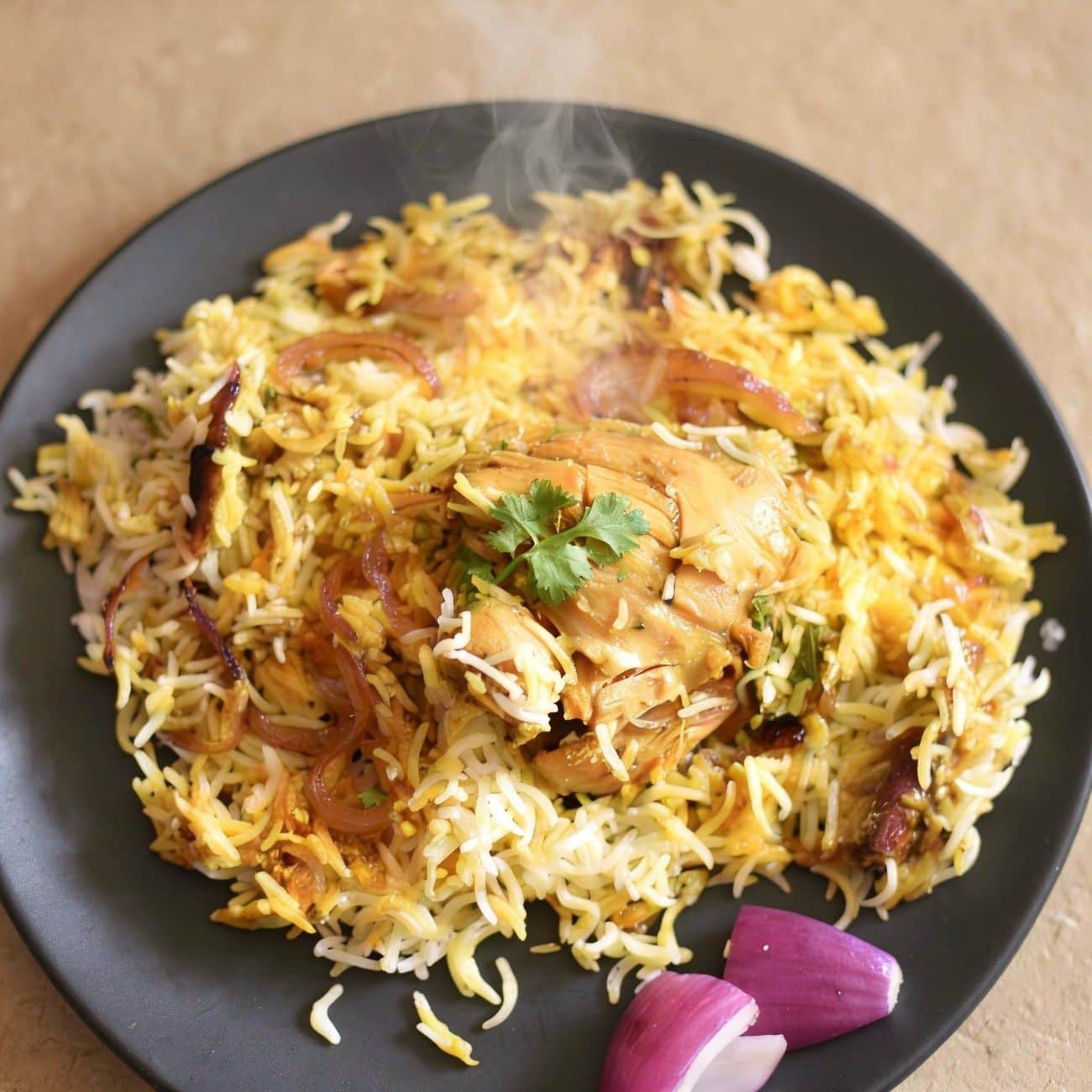
Beary Biryani is a traditional coastal Karnataka biryani prepared by the Beary Muslim community. Known for its mild spices, aromatic rice, and subtle sweetness, it reflects strong Middle Eastern influences. Made using short-grain rice and gentle masala, this biryani offers a light yet flavourful experience with tender meat and fragrant seasoning.
Ingredients
- 2 cups jeerakasala or kaima rice
- 500 grams of chicken or mutton
- 1 cup thick curd
- 2 large onions, thinly sliced
- 1 tablespoon ginger garlic paste
- 2 green chillies, slit
- ½ teaspoon turmeric powder
- 1 teaspoon garam masala
- Whole spices such as bay leaf, cloves, cardamom, and cinnamon
- Fresh mint leaves
- Fresh coriander leaves
- 2 tablespoons raisins
- 2 tablespoons cashew nuts
- 3 tablespoons ghee
- Salt to taste
Recipe
- Wash and soak the jeerakasala rice for 20 minutes, then cook separately with whole spices until fluffy and fully done before draining excess water.
- Marinate the meat with curd, ginger, garlic paste, turmeric, salt, mint, and coriander for at least one hour.
- Heat ghee in a heavy-bottom vessel and fry sliced onions until light golden and aromatic, reserving some for garnish.
- Add the marinated meat and cook gently until tender and coated in rich masala.
- Fry cashews and raisins in ghee until golden and slightly crisp.
- Layer the cooked rice over the meat mixture, and sprinkle fried onions, cashews, and raisins evenly on top.
- Cover tightly and cook on a low flame for 15 to 20 minutes so the flavours blend well.
- Rest briefly before gently mixing and serving hot.
Beary Biryani stands out for its delicate spices and balanced sweetness. With tender meat, aromatic rice, and nutty garnish, it delivers a comforting coastal flavour. Serve it with raita or pickle for a wholesome and satisfying Indian meal.
12) Chettinad Biryani
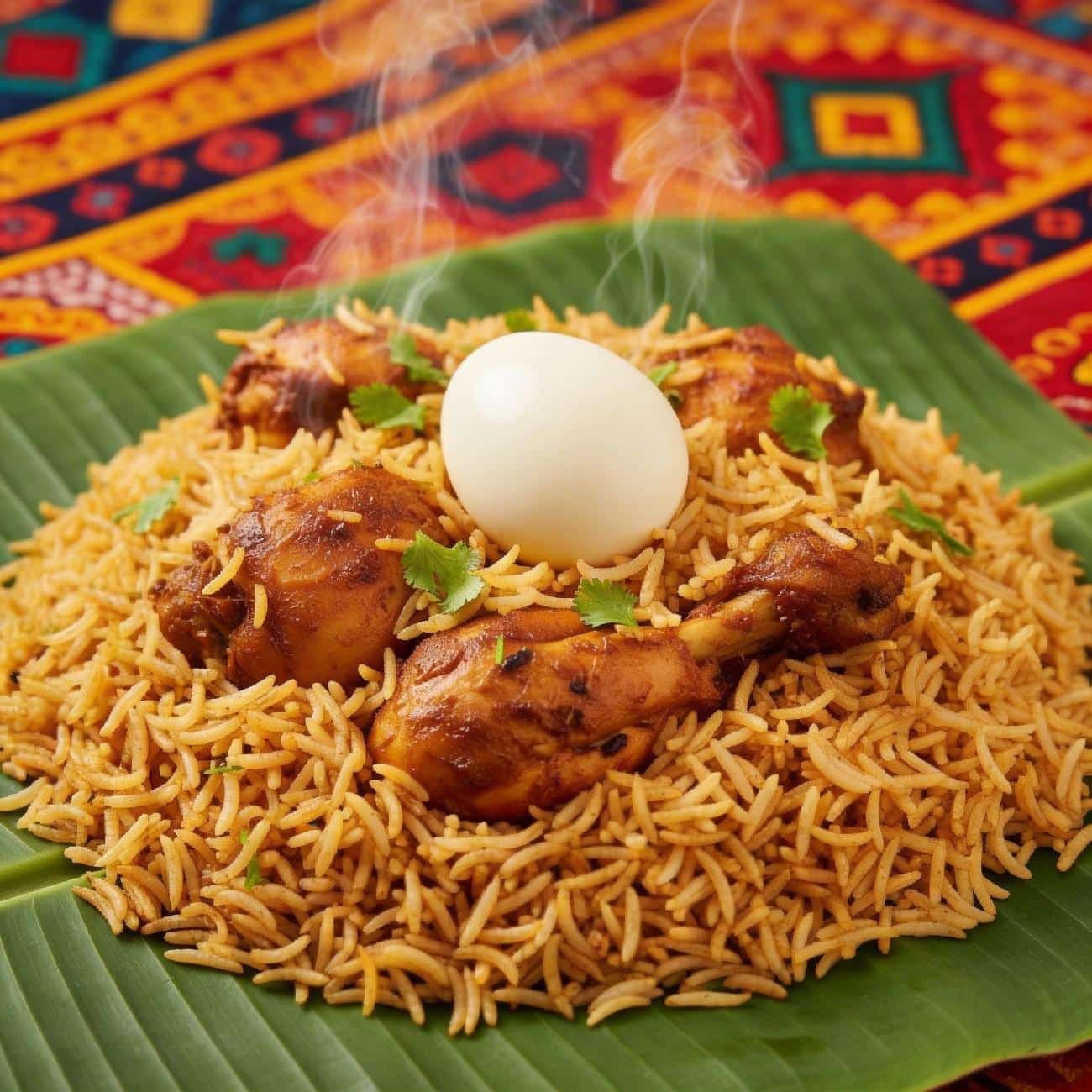
Chettinad Mutton Biryani is a bold and spicy Tamil Nadu speciality known for its freshly ground masala and intense flavour. Prepared with aromatic seeraga samba rice and tender mutton, this biryani highlights black pepper, fennel, and whole spices. It delivers a fiery yet balanced taste that reflects the rich culinary heritage of the Chettinad region.
Ingredients
- 2 cups seeraga samba rice
- 500 grams of mutton
- 1 cup thick curd
- 2 large onions, finely sliced
- 2 tomatoes, chopped
- 1 tablespoon ginger garlic paste
- 2 teaspoons red chilli powder
- ½ teaspoon turmeric powder
- 1 teaspoon black pepper powder
- 1 teaspoon fennel seeds
- Whole spices such as bay leaf, cloves, cinnamon, and cardamom
- Fresh mint leaves
- Fresh coriander leaves
- 3 tablespoons oil
- Salt to taste
Recipe
- Wash and soak the seeraga samba rice for 20 minutes, then drain and keep aside.
- Marinate the mutton with curd, ginger, garlic paste, chilli powder, turmeric, pepper powder, salt, mint, and coriander for at least one hour.
- Heat oil in a heavy-bottom vessel and sauté fennel seeds and whole spices until aromatic, then add sliced onions and cook until golden.
- Add chopped tomatoes and cook until soft before adding the marinated mutton.
- Cook the mutton until tender and the masala thickens well.
- Add measured water and bring it to a boil, then mix in the soaked rice evenly.
- Cook on medium flame until the rice absorbs most of the liquid, then cover and cook on low flame until fully done.
- Rest briefly before gently fluffing and serving hot.
Chettinad Mutton Biryani is celebrated for its strong spice profile and rich aroma. With tender mutton and flavourful seeraga samba rice, it offers a true taste of Tamil Nadu. Serve it with onion raita or brinjal curry for a hearty and satisfying meal.
13) Calicut Biryani
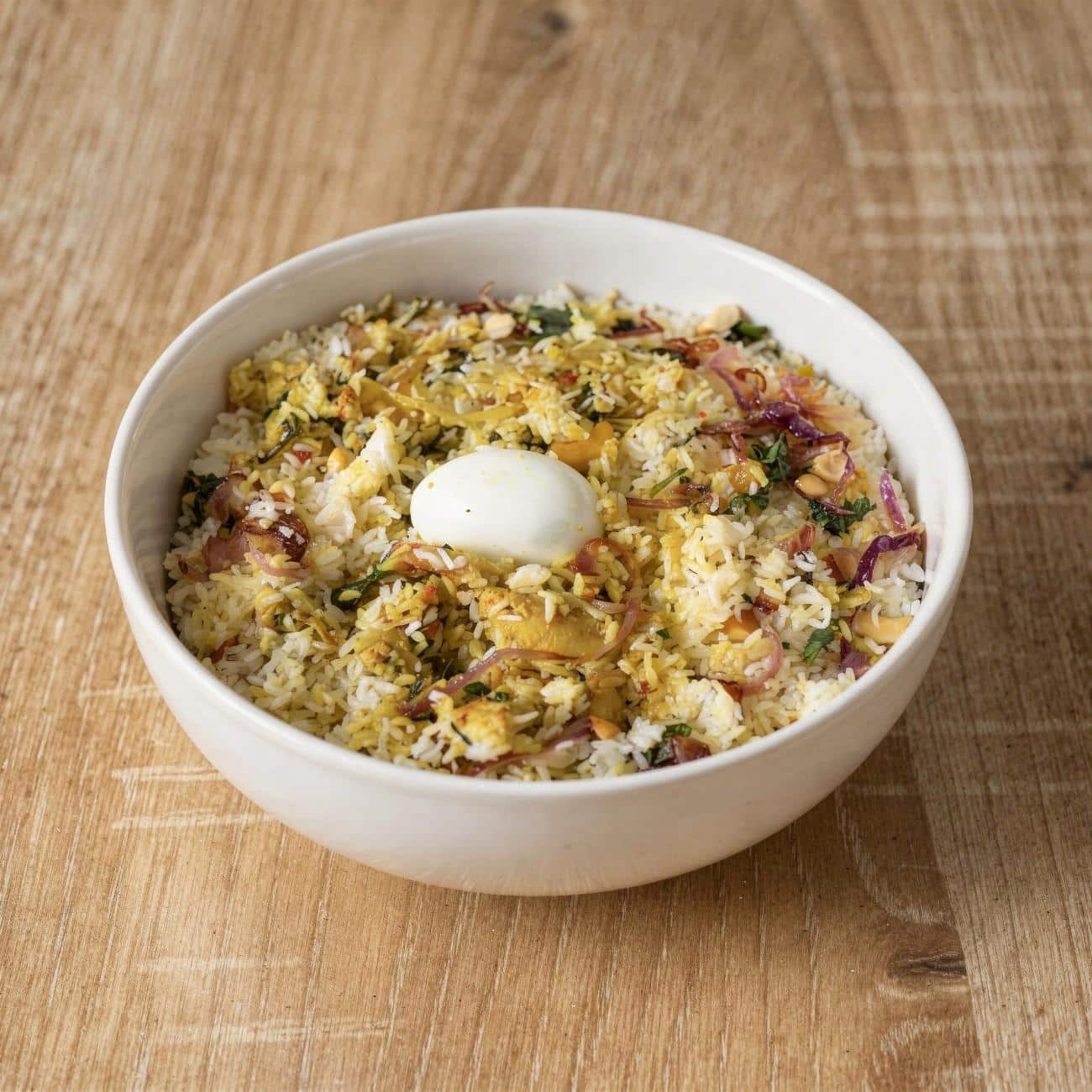
Calicut Biryani, also known as Kozhikode Biryani, is a fragrant Kerala-style biryani made with short-grain kaima rice. Known for its mild spices, caramelised onions, and subtle sweetness from raisins, it offers a balanced coastal flavour. Tender meat, aromatic rice, and ghee-infused masala make this dish rich yet delicately spiced.
Ingredients
- 2 cups kaima or jeerakasala rice
- 500 grams of chicken or mutton
- 1 cup thick curd
- 2 large onions, thinly sliced
- 1 tablespoon ginger garlic paste
- 2 green chillies, slit
- ½ teaspoon turmeric powder
- 1 teaspoon garam masala
- Whole spices such as bay leaf, cloves, cardamom, and cinnamon
- Fresh mint leaves
- Fresh coriander leaves
- 2 tablespoons raisins
- 2 tablespoons cashew nuts
- 3 tablespoons ghee
- Juice of half a lemon
- Salt to taste
Recipe
- Wash and soak the kaima rice for 20 minutes, then cook separately with whole spices until fluffy and fully done before draining excess water.
- Marinate the chicken or mutton with curd, ginger, garlic paste, turmeric, salt, mint, and coriander for at least one hour.
- Heat ghee in a heavy-bottom vessel and fry sliced onions until golden brown, reserving some for garnish.
- Add the marinated meat and cook gently until tender and coated in rich masala.
- Fry cashews and raisins in ghee until golden and aromatic.
- Layer the cooked rice over the meat mixture, sprinkle fried onions, cashews, raisins, and lemon juice evenly.
- Cover tightly and cook on a low flame for 15 to 20 minutes so the flavours blend well.
- Rest briefly before gently mixing and serving hot.
Calicut Biryani stands out for its delicate spice profile and aromatic kaima rice. With tender meat and sweet, nutty garnish, it offers a comforting Kerala-style experience. Serve it with raita or pickle for a wholesome and satisfying meal.
Vegetarian Biryani and Pulao: Seven Ways to Cook Rice Without Meat
The thirteen biryanis above all lean on meat or fish, but a large share of Indian households cook the same style of dish without either.
On a certain kind of Sunday, a heavy-bottomed pot comes down from the top shelf and the whole flat knows what is coming. Onions turn the colour of strong tea. Cloves, bay leaf, and cracked cardamom send their smell down the stairwell before lunch is anywhere near ready. Nobody asks whether the pot holds a biryani or a pulao until the lid comes off, and then the argument begins. Both are fragrant rice dishes, and only one of them was assembled in layers.
Why do vegetarian biryani and pulao matter in Indian kitchens?
Vegetarian rice dishes matter because most Indian households cook them regularly. Pew Research Center’s 2021 survey of Indian adults found that 39% describe themselves as vegetarian and 81% follow some restriction on meat, so a meatless biryani is closer to the norm than to a workaround.
Pew Research Center reports that 39% of Indian adults describe themselves as vegetarian. The figure comes from 29,999 face-to-face interviews in 17 languages, conducted from Nov. 17, 2019, to March 23, 2020. Source: Manolo Corichi, Pew Research Center, July 8, 2021.
Pew Research Center reports that 81% of Indian adults follow some restrictions on meat in their diet. Same survey and sample as above. The full findings sit in the report Religion in India: Tolerance and Segregation (Pew Research Center, 2021).
In practice, that means a household often has two rice pots in its repertoire: the pulao for a Wednesday, when one pot and modest patience are all you have, and the biryani for the weekend or the guest who has travelled a long way.
What is the difference between vegetarian biryani and pulao?
Vegetarian biryani is a layered dish in which a spiced vegetable or paneer masala and part-cooked rice finish together under a sealed lid, while pulao cooks the rice and vegetables together in one pot with the seasoning added at the start. The layers and the sealed steam are what separate them.
Vegetarian biryani is a layered rice dish made from a spiced masala of vegetables, paneer, or legumes and part-cooked rice, sealed and finished on dum (slow steam).
Onmanorama’s food desk puts the rule of thumb simply: “any masala layered rice preparation, topped with fried onions, can be termed biryani,” which is why meat is not required (Onmanorama, 2023).
Pulao is a one-pot rice dish in which rice cooks by absorption, in water or stock, with whole spices and vegetables added from the start.
The Hyderabadi tradition treats the vegetable version as a full member of the family. Wikipedia’s entry on Hyderabadi biryani records that “the vegetable biryani is prepared with mixed vegetables in a similar manner to dum biryani with meat.” Chef Kunal Kapur adds a third relative, tahri, in which vegetables are fried with spices as they would be for a biryani and then mixed with rice without layering, as they would be for a pulao, which gives a spicier result than a standard pulao (Kunal Kapur).
| Feature | Vegetarian biryani | Pulao | Tahri |
| Rice | Basmati, part-cooked in salted water first | Basmati or another long-grain rice, cooked by absorption | Soaked rice, cooked with the vegetables |
| Flavour base | A separate, thick masala or a curd marinade | Whole spices tempered in ghee or oil at the start | Vegetables fried with spices, noticeably spicier than pulao |
| Assembly | Layers of masala, rice, fried onion, and herbs | None; everything cooks in one pot | None; stirred through |
| Finish | Sealed and steamed on dum | Covered until the water is absorbed | Covered until the water is absorbed |
| Effort | Highest of the three | Lowest of the three | Moderate |
| Usual partner | Raita and mirchi ka salan | Dal, a light curry, or raita | Raita and pickle |
Compiled by AwesomeCuisine from Onmanorama and Kunal Kapur; the “effort” row reflects our own kitchen experience.
A pulao gets its flavour while the rice cooks, and a biryani gets its flavour before the rice ever meets it.
Which vegetarian biryani should you cook first?
Start with the Hyderabadi-style vegetable dum biryani for the classic method, paneer biryani for a quicker weeknight version, and Kolkata-style potato biryani for a milder, more perfumed plate. All three share the same layering logic, so the first attempt teaches you the other two.
Hyderabadi-style vegetable dum biryani
This is the version to learn on. Large pieces of carrot, cauliflower, and potato go into a curd-and-spice marinade, get layered with part-cooked basmati, fried onions, mint, and saffron milk, and then rest under a lid sealed with a rope of atta dough. When you break that seal at the table, the steam that escapes carries the whole dish in one breath. On a Hyderabadi table it usually arrives with raita and mirchi ka salan, a peanut-and-sesame chilli gravy whose sourness cuts through the ghee.
Paneer biryani
Paneer suits biryani because it holds its shape under steam if you treat it gently. Sear the cubes in a little ghee until the edges colour, and fold them in when the masala is nearly finished, since paneer that simmers for a long time turns rubbery and squeaky. The masala can be closer to a restaurant-style tomato and cashew base, which makes this the easiest biryani to start with if you have never sealed a pot before.
Kolkata-style potato biryani
Kolkata’s biryani is famous for its potato, and the vegetarian version puts the potato at the centre. Whole or halved potatoes are fried until golden, then cooked in the masala until they pick up the colour of the spices, and the rice is usually milder and lightly scented with kewra or rose water. If you like your biryani gentle rather than fiery, this is the one your family will finish first.
Which pulao is worth making on a weeknight?
Kashmiri pulao, navratan pulao, and chana dal pulao are three dependable starting points. Kashmiri pulao is mild and sweet with dry fruit, navratan pulao is a mixture of vegetables, fruit, and nuts named after the nine jewels, and chana dal pulao is the most filling because the dal gives the rice extra body.
Kashmiri pulao
Kashmiri pulao leans sweet and gentle, with saffron, sliced almonds, and raisins and no chilli heat at all. The colour depends on blooming the saffron strands in warm milk before they go into the rice; our saffron rice recipe shows how, and it is worth learning if you have only ever dropped the strands in dry. Our full Kashmiri pulao recipe covers the rest.
Navratan pulao
Navratan pulao is the one to make when you want the plate to look like a celebration. Carrots, beans, peas, paneer, pineapple, cashews, and raisins share the pot, and the trick is to fry the nuts and fruit separately and fold them in at the end so they stay bright instead of soggy. Follow our navratan pulao recipe for the vegetable timings.
Chana dal pulao
Chana dal pulao is the steady workhorse of this list. The split chickpeas need a head start, so soak them for an hour or par-cook them briefly, or the rice will finish while the dal is still chalky at the centre. Cooked properly, each grain of dal keeps a slight nutty bite against the softer rice, and the pot smells of toasted cumin and ghee. Our chana dal pulao recipe walks through the soaking.
How healthy are vegetarian biryani and pulao?
Vegetarian biryani and pulao are both rice-based dishes, and the ICMR-NIN Dietary Guidelines for Indians 2024 place vegetable biryani at a glycemic index (GI) of 74.53, close to the 78.23 listed for plain rice. A GI of that size describes how quickly the rice carbohydrate raises blood glucose after a meal.
ICMR-NIN lists vegetable biryani at a glycemic index of 74.53 (SD 6.1), against 78.23 for rice and 42.15 for masoor dal. Each value in the table is the mean of ten participants, calculated for 50 g of available carbohydrate. Source: ICMR-National Institute of Nutrition, Dietary Guidelines for Indians 2024, Annexure III, p. 126.
| Food (ICMR-NIN Annexure III) | Glycemic index (mean, SD) | What it is |
| Rice | 78.23 (4.24) | Plain cooked rice |
| Vegetable biryani | 74.53 (6.1) | Layered rice dish |
| Bisibelebhath | 74.64 (5.8) | Rice, dal, and vegetables cooked together |
| Tomato rice | 68.89 (6.2) | Flavoured rice |
| Wheat chapatti | 65.66 (4.22) | Flatbread, for comparison |
| Mixed dhal | 43.64 (6.98) | Dal cooked alone |
| Masoor dhal | 42.15 (3.26) | Dal cooked alone |
Source: ICMR-NIN, Dietary Guidelines for Indians 2024, Annexure III. No pulao is listed in the table.
One detail in that table is easy to miss. Bisibelebhath, which cooks dal and rice in the same pot, lands at 74.64, essentially level with vegetable biryani, even though dal measured alone sits at 42 to 44. Stirring dal into the pot did not pull the rice down to dal-like territory in this measurement, which is worth knowing before you assume that a pulao with lentils is automatically the gentler choice.
The same guidelines make a practical suggestion for how to eat them: “Eat a variety of vegetables and fruits in all your meals in various forms (raw salad, curry, dry cooked vegetables, soups, as raita mixed with curd or added to pulse and cereal preparations).” A bowl of raita and a plate of cucumber and onion beside the biryani fit that advice without changing the recipe (ICMR-NIN, 2024).
The table records one number per dish, taken from ten participants eating one preparation of each. It does not record how your own pot behaves, and the guidelines say so directly: “The GI and GL are only indicative. They may differ depending on the ratios of different ingredients and preparation methods.” The recipe rows also appear to draw on a study of South Indian breakfast foods (Devindra and colleagues, 2022), so a Hyderabadi dum biryani made with more ghee, more onion, and a different rice variety could land somewhere else. It is reasonable to expect that raita or salad softens the effect of the rice, but the table measures each food on its own and never tests that pairing, so treat the expectation as a suggestion rather than a result.
How do you cook vegetarian biryani and pulao without the common mistakes?
Soak basmati for 30 minutes, part-cook it for biryani or measure the water carefully for pulao, and leave the pot alone once the lid is on. Most failures come from mushy rice and vegetables cooked to paste, and timing fixes both more reliably than extra ingredients.
Listen to the pot at the start. Whole cumin should crackle and darken by one shade in hot ghee, and the bay leaf should smell a little like tea before anything else goes in. That is the point at which a pulao has its seasoning, and it takes about a minute, so do not walk away.
| Mistake | What you see | The fix |
| Boiling biryani rice past part-cooked | Split grains and a soft mash at the bottom | Drain when a grain breaks with a firm bite and a thin white core; it finishes in the steam. |
| Stirring a pulao after the lid is on | Broken, sticky grains | Stir once when the water goes in, then leave it alone until the water is absorbed. |
| Cutting vegetables small | Vegetables dissolve into the rice | Cut carrots, potatoes, and cauliflower into large pieces, and add peas and beans later. |
| Browning onions too fast | Bitter, dark fried onions | Fry in batches on medium heat to deep golden; they keep darkening as they cool. |
| Weak seal on the dum pot | Dry top layer and raw rice | Seal with an atta rope or foil under a heavy lid, and set the pot on a tawa over low heat. |
| Adding paneer early | Rubbery, squeaky cubes | Sear separately and fold in at the last minute. |
Common problems and fixes for both dishes.
The rice does not care what you call the dish. It cares whether the water was measured and whether the lid stayed shut.
Choose a slow Saturday for the dum biryani, when you can afford to smell the seal working, and a busy Wednesday for the pulao. Cook both with the same basmati, taste them one after the other, and see which pot your own kitchen handles more happily. Whichever wins, write your timings in the margin of the recipe, because you will want them next time.
Conclusion
Biryani reflects the rich history and diverse culinary traditions of different parts of India. From Awadhi biryani shaped by the royal kitchens of Lucknow to Hyderabadi biryani recipe styles using raw marinated meat and dum cooking, each version highlights the spices, tender mutton pieces or goat meat, and fragrant rice grains. In South India, jeera samba rice creates a unique taste, while West Bengal is known for the addition of potatoes.
Whether you try a popular biryani recipe, chicken dum biryani, paneer biryani, or vegetable biryani, these biryani varieties continue to define authentic Indian cooking rice traditions.
Frequently Asked Questions
Can you explain the main regional variations of biryani across India?
The different types of biryani showcase strong regional roots across India. Popular types of biryani India include Hyderabadi, Awadhi, Kolkata, Malabar, and Ambur styles. If you ask how many types of biryani are there, countless variations exist shaped by local spices, rice, and cooking traditions.
Are there specific ingredients that make each type of biryani distinct?
Yes, ingredients define the different types of biryani. Hyderabadi uses raw marinated meat and bold spice blends, Awadhi relies on gentle whole spices, Kolkata includes potatoes, and Malabar may use coconut milk. Rice variety and meat selection further influence each regional flavour identity.
Which types of biryani are most suited for someone who prefers milder flavours?
For milder flavours, Awadhi biryani offers delicate aroma and subtle seasoning. Kolkata biryani is also lighter compared to spicier regional versions. Among types of veg biryani, paneer biryani and vegetable biryani with seasonal produce suit those who prefer softer spice levels.
What kind of potatoes should I buy for Kolkata mutton biryani?
Choose firm, medium sized potatoes that hold shape during dum cooking. Indian varieties like Jyoti are suitable. Potatoes are traditional in Kolkata mutton biryani and complement tender meat pieces, adding mild sweetness without turning mushy during slow, layered cooking.
What is the difference between Hyderabadi and Lucknowi biryani?
Hyderabadi biryani layers raw marinated meat with rice and cooks them together using dum, creating bold flavours. Lucknowi or Awadhi biryani partially cooks rice and meat separately before layering. Awadhi flavours are milder, while Hyderabadi is richer and more intense.
What kind of mutton should I get for biryani?
Choose fresh goat meat with medium sized pieces from shoulder or leg cuts. Slight fat content enhances flavour during slow cooking. Quality mutton ensures tenderness and depth of taste across varieties of biryani, especially traditional dum preparations and regional styles.
Can biryani be vegetarian?
Biryani can be fully vegetarian, because layered, sealed cooking of a spiced masala with rice is what defines it, and meat is optional. Vegetables, paneer, mushrooms, jackfruit, and potatoes fill that role in different regions, and the technique stays the same.
What is the difference between tahri and vegetable pulao?
Tahri is a vegetable and rice dish in which the vegetables are fried with spices first, which makes it hotter and more robust than a standard vegetable pulao. Pulao is seasoned by tempering whole spices in ghee at the start and letting the rice absorb them, so the flavour is gentler and the vegetables play a supporting role.
Is vegetable pulao healthier than vegetable biryani?
The ICMR-NIN table lists a glycemic index for vegetable biryani but none for pulao, so the guidelines cannot settle the comparison. The quantity of ghee or oil in the pot and the size of the serving are the parts you control, and both differ more between households than between the two dishes.
Which rice should you use for vegetarian biryani?
Aged basmati is the usual choice for biryani, because its long grains stay separate after part-cooking and steaming. Some southern styles use short-grain varieties such as kaima instead, and those give a softer, more aromatic plate.


beaf biryani where of famous coock