
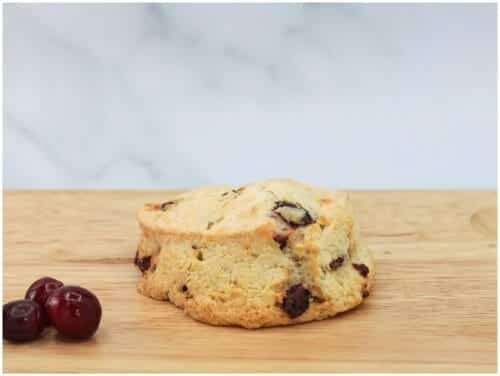
Cranberry oat scones are a straightforward bake that works well for breakfast or an afternoon snack. The dough comes together quickly, and the scones go from oven to cooling rack in about 15 to 20 minutes. Oats, cranberries and orange zest give each scone a distinct flavour without making them overly sweet.
Oat-based doughs absorb liquid a little differently from an all-flour dough. If the dough feels slightly sticky at first, resist adding extra flour. The oats will absorb moisture as you knead, and the dough will firm up.
About the Recipe
Rolled oats and plain flour together give the scones enough structure to hold their shape when cut with a cookie cutter. Buttermilk and melted butter keep the crumb soft, and two teaspoons of baking powder provides the lift needed for a short bake at 200C.
Dried cranberries go into the dry ingredients so they are distributed evenly through the dough from the start.
Why You Will Love This Recipe
The dough requires no chilling and no special equipment beyond a bowl, a cookie cutter and a lined baking tray. The wet ingredients are poured into the dry and kneaded briefly, so the whole process is manageable even for a first-time baker.
Orange zest and cranberry is a pairing that tastes considered without requiring any unusual ingredients.
Cooking Tips
Do not overknead the dough. Work it just until it comes together into a smooth, soft ball. Overkneading makes scones tough.
If you do not have buttermilk, stir one teaspoon of lemon juice or white vinegar into a quarter cup of regular milk and let it sit for five minutes before using.
Flour your surface and cutter lightly. Press the cutter straight down without twisting, as twisting can seal the edges and reduce the rise.
Watch the scones from the 15-minute mark. They are ready when the tops are golden brown and the edges look set rather than wet.
Serving and Storing Suggestions
Serve the scones warm or at room temperature. They go well with butter, cream cheese or a plain fruit jam.
Once fully cooled, store them in an airtight container at room temperature. For longer storage, place them in a sealed bag and freeze. Reheat frozen scones in a low oven until warmed through; microwaving can make them chewy.
Similar Recipes
- 15 Quick and Easy Oats Breakfast Recipes for Busy Mornings
- Butter Cookies
- Peanut Butter Cookies
- Oats Laddu
Nutrient Benefits
Rolled oats contribute dietary fibre and protein. Dried cranberries supply small amounts of vitamin C, though the quantity per scone is modest. Buttermilk adds a little calcium to the dough.

Cranberry Oat Scones
Ingredients
- 1 cup Rolled Oats
- 3/4 cup Plain Flour
- 1/4 cup Dried Cranberries
- 1/4 cup Caster Sugar
- 2 tsp Baking Powder
- 1/4 tsp Salt
- 1 Egg medium
- 1/4 cup Unsalted Butter melted
- 1/4 cup Buttermilk
- 1/2 tsp Orange Zest finely grated
- 1/2 tbsp Granulated Sugar
Instructions
- Preheat the oven to 200C / 400F.
- Mix the oats, flour, cranberries, sugar, salt and baking powder in a large bowl.
- Make a well in the center.
- In a separate bowl, mix the melted butter, beaten egg, orange zest and buttermilk.
- Pour this mixture into the well and knead well to make a soft dough.
- Transfer the dough to a floured surface.
- Using a cookie cutter, cut out small circles and place them on a baking tray lined with parchment paper.
- Sprinkle with some granulated sugar on top.
- Bake for 15 to 20 minutes or until the scones are golden brown.
- Remove and allow them to cool.
- Serve as desired or store them in an airtight container.
Sign up for our newsletter
Add Awesome Cuisine as a Preferred Source

Frequently Asked Questions
Can I use quick oats instead of rolled oats in this cranberry oat scones recipe?
Quick oats are more finely processed and absorb liquid faster, giving a softer crumb with less noticeable oat texture. You can use them in the same quantity as a direct substitute. Rolled oats hold their structure better during baking, so they are preferred here.
My dough is too sticky to roll out. What should I do?
A small amount of stickiness is normal because oats take a little time to absorb the buttermilk. Knead for another minute and check again. If the dough is still unworkable, dust your hands and the surface lightly with flour and continue. Avoid adding large amounts of flour at once, as this can make the finished scones dry.
Can I use fresh cranberries instead of dried?
Fresh cranberries contain much more moisture than dried ones and will release liquid into the dough as it bakes, which can make the scones wet in patches. Dried cranberries are recommended for this recipe. If you want to use fresh, chop them small and reduce the buttermilk slightly to compensate for the extra moisture.
How do I know when the scones are properly baked?
Look for an even golden brown colour on top and at the base. The edges should appear set and dry rather than shiny or soft. If you press the top gently, it should feel firm and spring back slightly. Start checking at the 15-minute mark since oven temperatures vary, and remove them as soon as they reach this stage.
Can I leave out the orange zest?
Yes, the orange zest is optional. It adds a mild citrus note that works well with the cranberries, but the scones will still bake correctly without it. A small amount of lemon zest works as a substitute if you want to keep a similar flavour direction. Leave it out entirely if you prefer a more neutral, oat-forward result.